Location pages
Swap the suburb name. If nothing else has to change, it isn’t a page.
We build location pages out of jobs you have actually done — one on Regional, six on Suburban, twelve on Metro — then check every page on your site against every other page, and show you the results.
Free check, no email, no call. The result is on your screen.
Free check
See where you turn up when a customer searches your trade in your suburb.
Nothing here gets written until we know who you’re selling to, what the other operators in your patch already say, and what you can say that they can’t. You get that in writing before a page gets built. What that means before we start.
You paid for 25 location pages and you’ve never read one
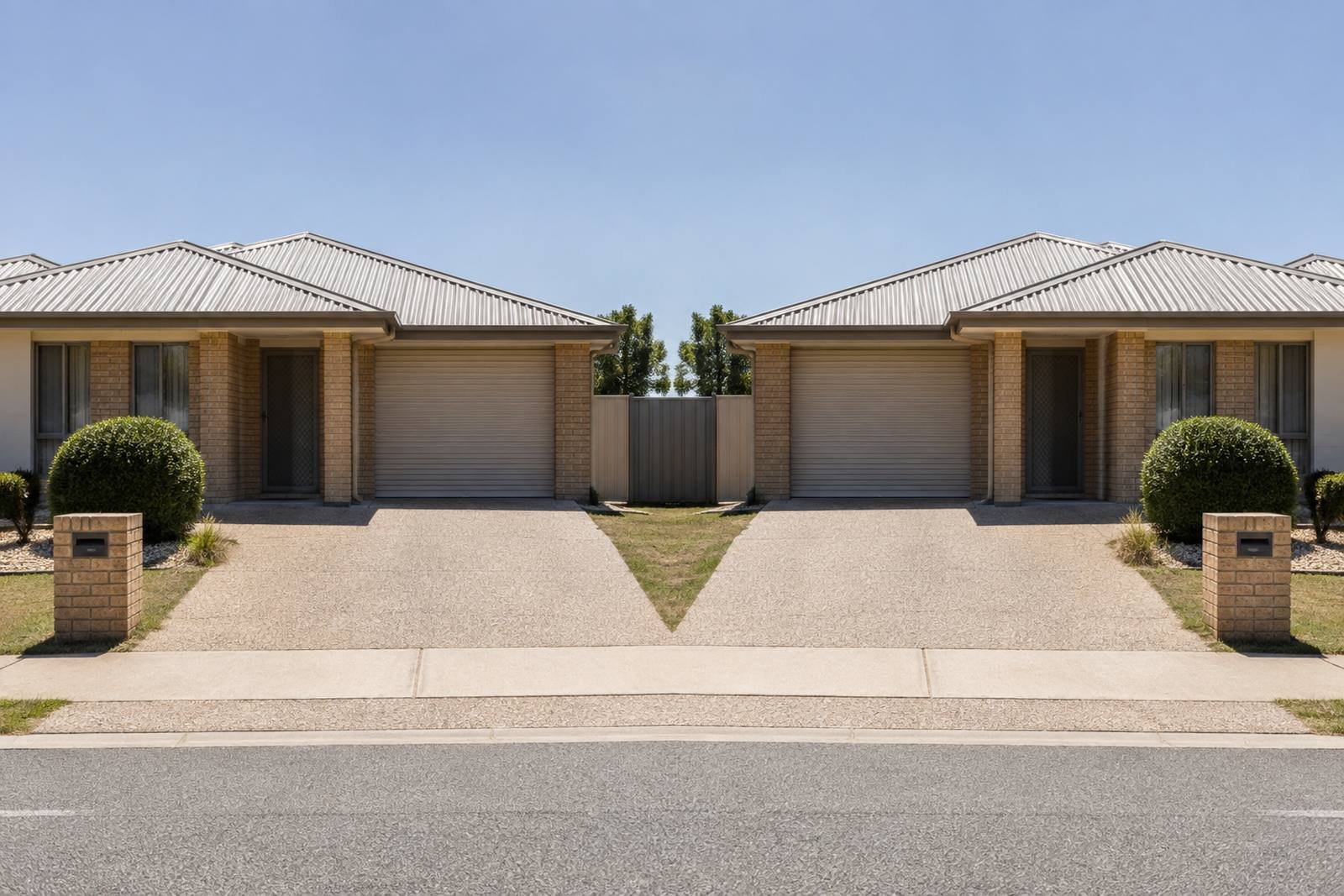
Open two of them side by side. Cover the suburb name in the heading. Now find the sentence that’s different.
Google ran a spam update between 24 and 26 June 2026 — two days and one hour, on its own status dashboard. Google doesn’t say what an update went after. What it does publish is its spam policy on scaled content abuse, many pages made to move rankings rather than help anyone. Three questions:
- Swap the suburb name — does anything else have to change?
- Could a reader tell you had genuinely worked there?
- Does the page exist for a customer, or for a ranking?
Twenty-five location pages spun out of one template fail all three. Ask whoever sold them to you which of the three they pass.
Why fewer pages, built differently
A page whose only local content is the suburb name fails the check that runs before anything of yours goes live. A page built from a real job in that suburb passes it.
The same check runs over your site, every page, before any of it is published.
Before you spend anything
Run the swap test on your own site tonight
It takes two minutes and costs nothing. Open two of your location pages side by side, cover the suburb name in each heading, and read them. If you can’t find a sentence that differs, you already know what you paid for.
Free. We email you what we find within a business day. No call unless you ask for one.
We never share or sell your details, and we do not add you to a mailing list.
What it does for you
Four things 25 templated pages can’t do
A customer recognises his own street
A named estate, a build era, the fault you keep finding in one pocket of town. He reads it and knows you’ve been down his road, because you have.
Nobody can copy them
Anyone can look up your competitors’ names and review counts in an afternoon. Nobody can copy the job you did in Thornlie last winter.
They’re still there next year
A page that could only be about your work isn’t a smaller product than a hundred interchangeable ones — it’s the kind of page Google’s spam policies don’t name.
You can prove it rather than hope
Every page is checked against every other page on your site before anything goes live, and you see the results — pass and fail, page by page.

A suburb earns a page when two things are on file
One local specific. One real job. If a suburb can’t produce both, it doesn’t get a page — it becomes a section on your service-area page alongside the rest of your radius.
Getting those two things takes about 15 minutes on the phone. We record the call and work from the recording. Here is what we actually ask.
01
“Tell me about a job in Thornlie you’d remember.”
What it was, what went wrong, what it cost, how long you were there.
02
“What’s different about the houses there?”
Estate age, build era, acreage or townhouse, fleet or private vehicles. The stuff a local knows and a database doesn’t.
03
“Anything about that suburb that makes the job harder?”
Access, parking, strata rules, no mains gas, corrosion near the coast, roadworks, gated estates.
04
“What do people there ring you about most?”
The recurring job type. It can change two suburbs over.
05
“Anywhere you end up more than once?”
A street, an estate, a business park. A named place is worth more than a paragraph of general copy.
06
“What five questions do you get asked on every job?”
It’s free, it’s yours, and nobody else has your version of it.
Why we ask you instead of looking it up
A machine can pull competitor names, review counts and typical prices for any suburb you name. The trouble is it returns the same answers for every suburb in one radius. Run it on Southern River and then on Thornlie and you get the same facts twice.
No amount of spend on research tools fixes that. The missing input is in your head. So we ask for it once, and then we use it.
Then the writing, and who does what
We draft from the recording. AI does the typing; a person decides what goes live, reads the check results, and fixes what failed. Nothing goes live off a first draft.
6 real location pages are part of Suburban at $4,997, live in 3 weeks, 25% deposit · 50% on draft approval · 25% before it goes live.
The check, and what you see
Every page is compared against every other page on your site. Not just this week’s — all of them, every time pages get added. Check only the new ones and the content added in week 12 quietly repeats week 3, and nobody catches it, because nobody re-reads a site they already paid for.
Every page has to carry things that appear on no other page of yours. A named street, an estate, a fault you keep finding in one build era, a job that cost what it cost. “We service this suburb” doesn’t count.
If two pages start saying the same thing, they come back before anything is published — usually with a follow-up question or two about that one suburb.
And you see the results. Pass and fail, page by page, warnings left in, so you can check any line against your own site.
Every page also gets a technical check before it goes live. If it fails, it doesn’t go live.
Straight up, before the quote
When location pages are worth it, and when they’re not
Worth it
- You can name a real job in most of the suburbs you want to be found in.
- You’d rather own six suburbs properly than appear thinly in twenty-five.
- You’ve got location pages already and you’re not sure they’d survive the swap test.
- You can spare 15 minutes on the phone talking about work you’ve already done.
The 15 minutes is the whole ask. There’s no homework and nothing to write.
Where we’d say no
You want a page for every suburb in the metro. We won’t build them. They’d fail the check, and pages that fail don’t go live.
You can’t name a job in the suburbs you want. Then those suburbs go on your service-area page instead. Nothing gets invented to hit a number.
You want it done without the call. There isn’t a version of this that works without fifteen minutes of your time. If someone offers you one, ask them where the words come from.
You want a ranking promise. Nobody controls where Google puts you. What’s promised here is what can be checked.
What ships, and what it costs
6 location pages are part of Suburban at $4,997 — the full site, live in 3 weeks. Hold Your Patch keeps those suburbs shut to your trade for as long as you are on it.
Each page carries a local specific and a real job you did there. Suburbs that can’t produce both go on your service-area page instead, and we tell you which ones and why.
Not registered for GST. The price you see is the price you pay.
Free check, no email. The result is on your screen.
What we won’t do.
Write one page and change the suburb name. We could — the check would fail it, so there’d be no point, and it is the exact pattern Google’s spam policies name.
Pad the count. If fewer of your suburbs can produce a real job than your build includes, we tell you before you pay rather than inventing pages.
Promise you the top of the map. Nobody can. What’s promised is what’s checkable: pages built from your own jobs, no two of them saying the same thing, and the results that show it.
Take these to whoever else is quoting you
Five questions that sort a real location page from a template
Here is what to ask — of us and of everyone else.
01
“Where does the material for each page come from?”
Ours: a recorded 15-minute call about jobs you’ve done. If the answer is “research” or “we handle that”, ask them to show you two finished pages and cover the suburb names.
02
“How many pages, and who decides?”
Ours: one on Regional, six on Suburban, twelve on Metro, each from a real job. If a suburb can’t produce one, we tell you before you pay. Ask them what happens when a suburb has nothing real to say.
03
“What happens when two pages come out the same?”
Ours: they don’t go live, and they come back for more material. If nobody is checking, nobody knows. Ask them who checks.
04
“Do you check the old pages too, or only the new ones?”
Ours: all of them, every time. Check only the new ones and week 12 quietly repeats week 3 forever, because nobody re-reads a site they already paid for.
05
“Can I see the result, or do I take your word for it?”
Ours: you see the results, pass and fail, page by page. Ask them to show you theirs.
Ask any provider to show you two finished location pages and cover the suburb names.
Questions tradies ask about location pages
How many location pages do I actually get?
Another mob offered me 25 pages for less. Why fewer?
What if I can’t remember a job in one of the suburbs?
How long is the call and do I need to prepare anything?
Can’t you just write one page and change the suburb name?
What counts as a unique fact?
What happens if a page fails the check?
Do I get to see the results, or do I just take your word for it?
If you add pages later, does the old stuff get checked again?
Will these pages put me at the top of Google?
Who writes them, a person or a machine?
Can I add a suburb after launch?
Keep reading
Three pieces on what makes a location page real.
5 min read
The swap test: cover the suburb name and read it again
Cover the suburb name on 2 of your location pages and read them again.
6 min read
The 15 minutes that produce content nobody can copy
Ask about a job, not about the suburb.
6 min read
How to tell if two of your pages are really the same page
The test you can run yourself, without any tooling.
Start here
Start with what your location pages look like now
The free audit: a person looks at what’s published about you and emails you where you’re invisible within a business day. No call, no pitch first. Read it, then decide whether any of this is worth doing.
If your pages would already survive the swap test, we’ll tell you that.