
AI visibility
Someone asked their phone who to call in your suburb. It gave 3 names.
Not 10 results with ads on top. A few names, a sentence about each, and a tap to ring the first. Being one of those names is a job with real mechanics behind it. We do that work, and we show you what the AI assistants say about you now, before you pay anything.
Free check
See where you turn up when a customer searches your trade in your suburb.
You rank fine. He never opened Google.
Kitchen tap has let go, water on the floorboards, towel in one hand and phone in the other. He doesn’t type “emergency plumber near me” into a search bar. He asks the AI assistant who to ring and gets back 2 or 3 businesses with a reason for each. No map. No scrolling. If your name isn’t in those 3, you weren’t beaten on price. You weren’t in the conversation.
Check it yourself before you read on. Open ChatGPT, Gemini or Perplexity, type the exact question your customer would ask with your suburb in it, and see whose name comes back.
Two things straight up. Google still sends you work, and this doesn’t replace it. And a chat answer is not a ranking: no position 1, no page two, no scoreboard. Named, or not named.
Put your customer’s question to 3 AI assistants
Free, no email. It asks the question and shows every answer in full. We don’t rewrite them and we don’t grade them.
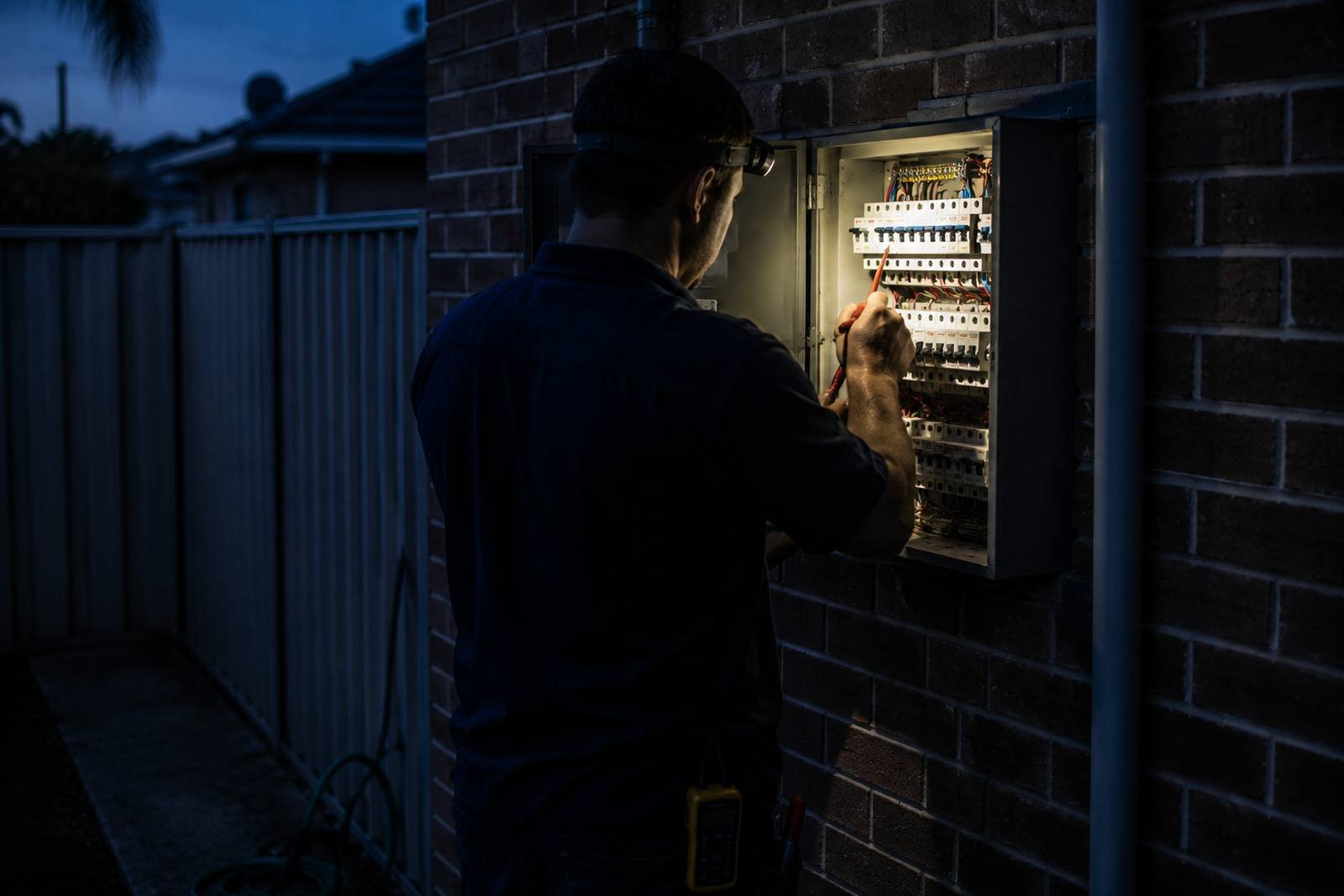
4 things make a business nameable to an AI assistant
An AI assistant isn’t judging your brand. It reads pages, matches facts against each other, and repeats what it can stand behind. All 4 of these are mechanical jobs, and we do all 4.
1
Put your facts where a machine can’t misread them
Your name, address, phone, hours, service area and the jobs you do get written into the page twice: once for the customer to read, and once in a block of code underneath — schema, if anyone has used that word at you — that machines read instead.
If the code says one thing and the page says another, a machine reading two versions of you won’t repeat either. We write both copies to match, word for word.
2
Make your facts agree everywhere they appear
Before we write a word, we run your details against what’s already published about you. Eight checks over your name, your number, your hours, your address and your licence, against every place online that already mentions you. Where two of them disagree, the build stops and someone rings you.
Old hours on a directory. A number from 2 vans ago. Fixable, but an AI assistant reading 3 versions of you won’t put its name behind any of them.
3
Give it something it can actually quote
An AI assistant repeats sentences. It can’t turn “quality workmanship and competitive pricing” into a recommendation. There’s nothing in there to repeat.
So we take 15 minutes on the phone for the 5 questions you’re asked on every job, plus one real job you remember in each suburb. Those go on the page answer first, in your words.
4
Let the AI bots in, both halves
There are six of these bots to let in, not three, and they come in pairs. One of each pair builds the assistant’s own list of pages it can search; the other goes out and fetches your page while someone is sat there waiting for the answer. Block either half and you lose half the chance.
- OAI-SearchBot surfaces you in ChatGPT search; ChatGPT-User fetches the page when someone asks — both named in OpenAI’s own crawler documentation.
- Claude-SearchBot and Claude-User, the same split, set out by Anthropic.
- PerplexityBot indexes; Perplexity-User visits a page to answer a live question, in Perplexity’s words.
All 6 are separate again from the crawlers that collect training data, so blocking one doesn’t block the other. A website security add-on can block the lot by accident. Every page we build is checked for this before it goes live. Bot names checked on 25 August 2026 against each company’s own documentation.
AI visibility has a 5th part, and we can’t do it for you
An AI assistant leans on facts it finds in more than one place, and your website is only one place. The others: a supplier’s approved-installer list, an accreditation register, a manufacturer’s find-a-fitter page, the local paper. That’s what tells it your business is real.
The details check in step 2 is what we do about it. It lists every source that already mentions you and every point where they disagree, so the mentions you’ve got pull in one direction instead of 3.
What we don’t do is manufacture mentions. Nobody here buys you a mention. The ones worth having you can earn: your supplier, the accreditation you already pay for, the club you sponsor. We hand you that list with the gaps marked. Ringing them is your job.
Straight up, before the quote
When AI visibility work is worth paying for, and when it isn’t
Worth it
- A customer in your suburb has real choice. Three names come back and two of them aren’t you.
- Your details are scattered — old hours on a directory, a number from 2 vans ago, a trading name that only half matches.
- You paid for a website and have no idea whether an assistant can read a single fact off it.
- You can spare 15 minutes on the phone talking about jobs you’ve already done.
Run the answer test first. If your name already comes back in all 3, keep your money.
Where we’d say no
You want a score that goes up every month. There is no position and no published metric, so there is no honest graph. We’d have to invent one.
You’re the only one in town. If an assistant has to name 3 businesses in a town that has 2, you’re in the answer whatever we do. Spend the money on the phone ringing more.
You want mentions bought for you. We won’t.
You want this instead of Google. It sits on top, never instead. If someone tells you rankings are finished, ask them where your calls come from now.
What every build includes
Every page is checked before it goes live: the AI bots can get in, no two pages read like each other, and each page carries at least 3 facts found nowhere else on your site. You get the results in writing.
None of this is sold on its own, because on its own it does nothing. It is part of the build: Regional at $2,997 for one town, Suburban at $4,997 for the suburbs you actually drive, Metro at $7,997 when your market is the whole city. Schema on every page, a hand-written robots.txt (the file that tells these bots they’re allowed in), and your details checked everywhere before a word is written — all 3 builds, no upgrade tier for it.
After it’s live, Stay Found at $1,297 a month re-runs the same check against the live site, turns one real job into a page each month, and sends a 1-page report in plain English. Hold Your Patch at $1,997 a month makes that writing fortnightly and holds your patch, which keeps giving an assistant something new to read. Both month to month. If we built the site, the first months of this come with the build — one month on Regional, two on Suburban, three on Metro, from the day it goes live.
Not registered for GST. The price you see is the price you pay.
See what 3 AI assistants say about you now
Free, no email, no call.
What happens each month
A person runs the monthly check and writes the monthly report, on a date you know. The rest happens during the build, by hand, once.

What nobody can tell you, us included
This is new and mostly unmeasured. Here’s the line between what’s known and what’s guessed.
No AI assistant publishes how it picks. No API returns your position, because there is no position. If someone shows you an “AI visibility score”, ask them how it’s worked out.
The answers move. Same question, same phone, next week, different names. Sometimes different names in the same hour.
We can’t promise you’ll be named. Not in a month, not ever. What goes in writing is the build, the 2 to 4 week timeline once everything is in, one trade per area, no lock-in.
Plenty of people are saying this right now. Recommended rather than ranked is a popular opinion, and a popular opinion isn’t evidence. We won’t predict where search goes next. Type your own question into your own phone instead. That’s the one part you never have to take our word for.
What is actually known: an assistant can only repeat what it can read, and it leans on facts it finds in more than one place.
The bit nobody agrees on yet
Four names, four different jobs.
People use “AI search” as though it is one thing. It is at least four, and they behave differently enough that a claim about one is not a claim about another.
- AI Overviews sit above ordinary Google results and are assembled from pages Google has already stored. Not stored by Google, not in these.
- ChatGPT Search fetches live pages when a question needs current information, and cites what it used.
- Perplexity shows its sources by default, which makes it the easiest of the four to check.
- Gemini draws on Google’s own search results and on Google Business Profile data.
We test against the ones that show their sources, because a source can be checked and a confident paragraph with no source cannot.
Straight answers to the awkward ones
Is this just SEO with a new name on it?
Can you get me to the top of ChatGPT?
How do I check what it says about me right now?
Do I still need to rank on Google?
What’s schema, and do I need to understand it?
Can you track whether I’m being recommended, month to month?
How long until an assistant starts naming me?
I’ve got 180 Google reviews. Isn’t that enough on its own?
Do you post to my Google Business Profile as part of this?
I already have a website. Can you fix that instead of rebuilding it?
Is there anything I can do myself this week for nothing?
What does it cost?
Keep reading
Three pieces on what an AI assistant can and cannot see.
5 min read
What an assistant actually reads when it lands on your site
An assistant gets a file of text and tags, not the page you see.
5 min read
The 6 crawlers your robots.txt should let in
Six names in three pairs. One half indexes, the other fetches your page live.
5 min read
One question, 3 assistants, 3 different answers
Put one suburb question to 3 assistants properly: the wording, the log to keep, what the disagreements mean and what the test cannot tell you.
See where you turn up
Your business name and your suburb. We check where you come up when someone searches your trade in your patch, who is above you, and what it would take to change that.
Free. We email you what we find within a business day. No call unless you ask for one.
We never share or sell your details, and we do not add you to a mailing list.
Find out what it says about you before you spend a cent
The free audit checks how your site is built, your published facts, and what 3 assistants say when asked who to call in your suburb. You get the findings either way.
Run the free audit Or try the AI answer test — free, no email
Month to month. One trade per area. We tell you what’s broken before anyone asks you for money.