Branding & brand kit
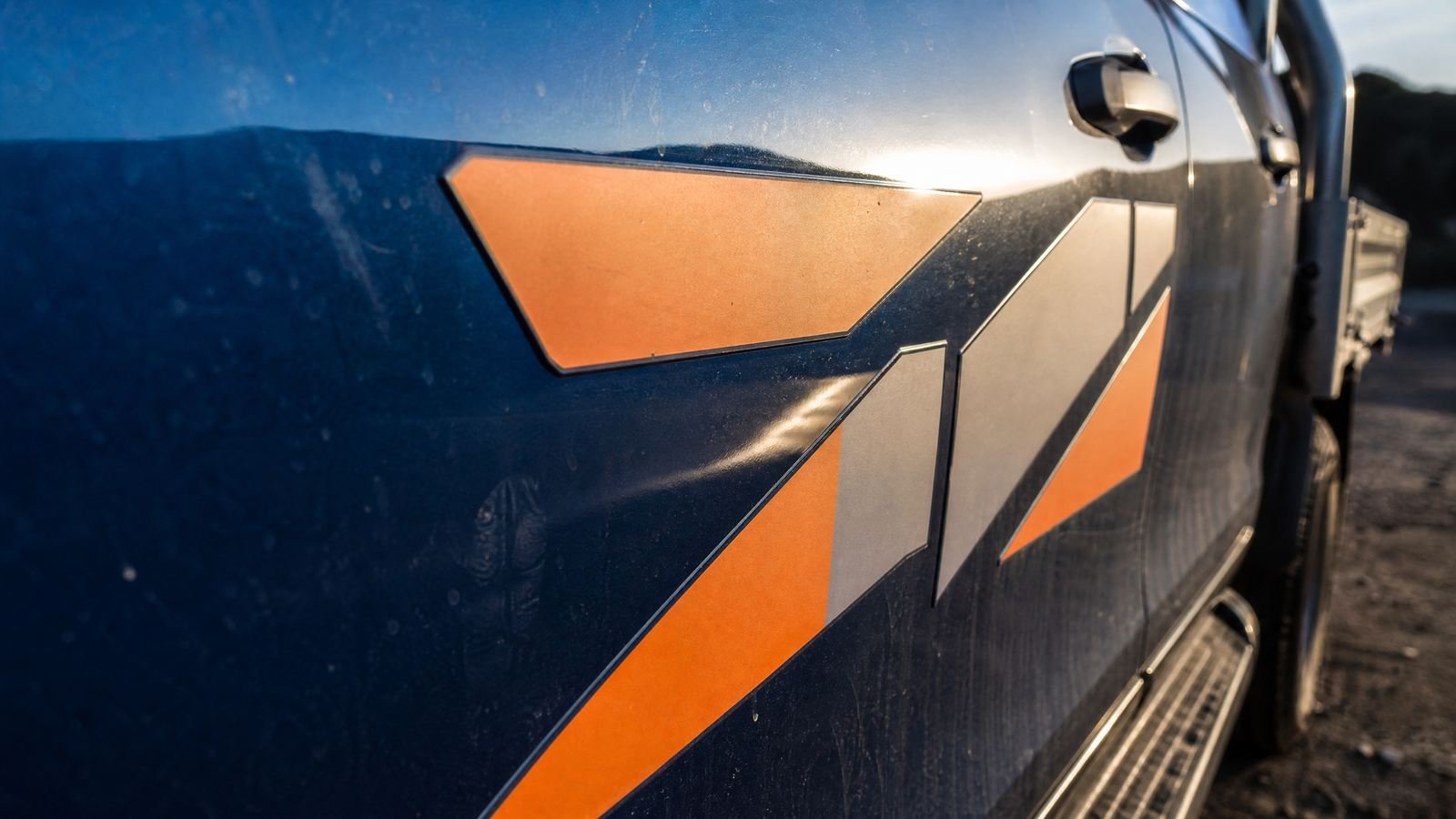
The same mark has to work at 900mm on a ute door and at the size of a fingernail in a search result.
$997, one-off, 100% upfront. Vector files in your own hands, a colour spec your signwriter can match off his own book, and a one-page sheet you forward to whoever’s doing the shirts.
Free check
See where you turn up when a customer searches your trade in your suburb.
The only logo file you’ve got is a JPEG somebody emailed you
It came off a $60 gig 4 years ago, or your sister-in-law made it in Canva one Sunday. It’s been on the ute since 2022 and nobody’s complained.
Then the sign shop asks for a vector. You send the JPEG. He says he’ll have to trace it, that’s an hour on the invoice, and the R comes back slightly wrong. Nobody notices except you, forever.
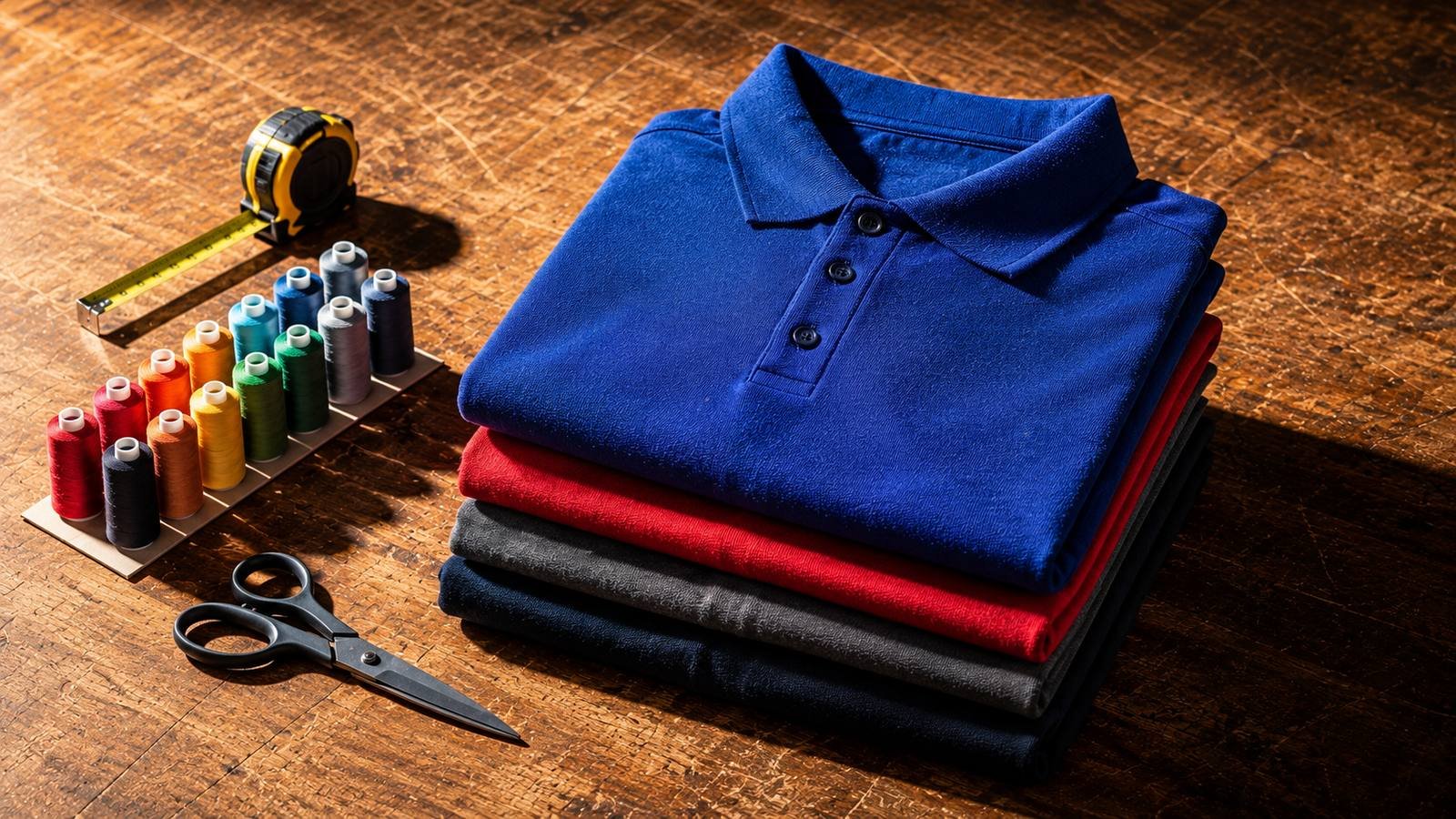
The shirt mob asks what green. You send a screenshot of the ute. The polos come back a shade off, and now the truck and the crew don’t match.
A logo isn’t a picture. It’s a set of files and 4 rules other trades work from: clear space, minimum size, which colour on which surface, and which file to send.
Small, grey and boring first. Colour comes last.
It’s easy to design a logo big, on a screen, in colour. Then it gets used small, on fabric, in one colour. We work the other way round.
1
We ask where it has to live before we draw anything
Ute doors and tailgate. Left chest on a polo. Hat fronts. Hard hat stickers. The quote and the invoice. A browser tab. A Facebook profile circle. A magnet, if the ute’s leased and you can’t cut vinyl on it.
That list decides the shape. A bloke with 3 utes and no uniform needs a mark that reads from a lane away. One whose work goes out on shirts needs a mark that survives at 25mm. Not the same drawing.
2
It gets drawn in black, at 25mm, before it gets a colour
Printed on paper, stuck on a wall, looked at from across the room. If it doesn’t read there, colour won’t save it. Colour hides a weak mark on a big screen and nowhere else.
What dies at that size, every time: hairlines, drop shadows, gradients, a spanner crossed over a lightning bolt, and any word set smaller than the business name.
3
Colours get chosen for the worst surface, not the best screen
Your screen makes colour out of light, so a lime can glow. Vinyl doesn’t glow. It’s a stock colour off a swatch book. Embroidery is a thread number. Print is 4 inks that can’t reach some screen colours at all.
So each colour ships 4 ways: hex for the web, CMYK for print, a named vinyl for the sign shop, a thread number for the shirts. Nobody has to match a screenshot.
4
The type gets outlined, and the fonts get licensed
The letters in your business name get converted to shapes. The file then needs no font installed anywhere, which is why it opens correctly on a plotter in a shed at 6am.
You get 2 typefaces, named, with the licence stated in writing. We pick open-licence ones wherever they’ll do the job, so you’re never paying a yearly fee to type your own headings.
5
Everything goes in one folder, named so you can find it in the ute
Not “logo-final-FINAL-v3”. The file the sign shop needs is named for the sign shop.
With it comes a one-page spec sheet: clear space, minimum size, the 4-way colour spec, which file to use for what. Forward it to the signwriter and he stops ringing you. That page is the difference between a brand and a logo.
What lands in the folder
A wide lockup for a ute door, a stacked one for squares, the mark on its own. No licence to renew, nothing held back on a server we control.
Every lockup in vector and in flat files
SVG, EPS and outlined PDF for anyone manufacturing something. PNG with a transparent background at 3 sizes. JPG on white for the mob whose upload form rejects the rest.
One-colour and reversed versions
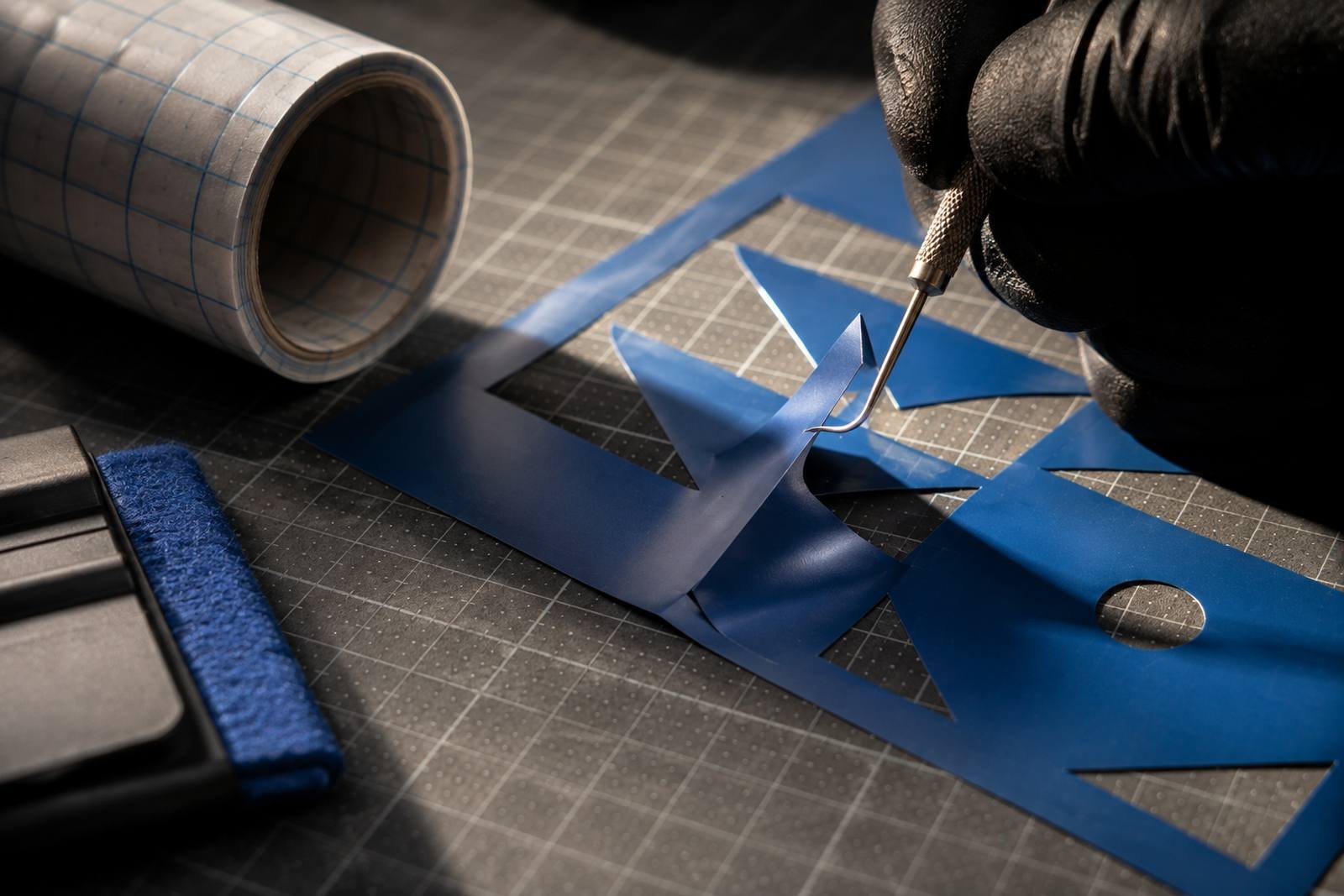
Solid black. Solid white for dark polos and the back of a black ute. A knockout version with the thin bits thickened for cut vinyl, because a hairline the plotter can cut is still one nobody can weed off the backing.
A site icon built to Google’s own requirement
Google’s requirement is a square file, at least 8×8 pixels, and it recommends going above 48×48. Then it draws the thing beside your result at a size you could cover with a fingernail. Yours shows the mark, not a blank globe, cropped and thickened so it still reads at that size.
The bit that isn’t a picture: one file the whole brand comes out of
This is what stops your green drifting.
Your colours, your 2 typefaces and your spacing rules go in one plain text file, and everything else is generated from it: your website and the colours on your quote and invoice. Change the green in one place and it changes everywhere at once.
What this doesn’t include
We don’t wrap utes, print shirts or manufacture signs. We hand the files and the spec sheet to whoever does, in the formats they ask for.
We don’t do trademark searches or registration. A logo isn’t a trademark and we’re not lawyers. Search IP Australia’s free TM Checker yourself, or pay an attorney, before a name goes on 3 utes.
Photography is a separate job: 25 images for $497, or 75 for $797.
A logo is a judgement call, so you see it small and grey first.
What it costs
$997, one-off, 100% upfront. Every lockup, every file format, the 4-way colour spec and the one-page sheet. No licence to renew, no watermark, no usage limit, nothing recurring. It’s paid upfront rather than in stages, because it takes days rather than the 2 to 4 weeks a build takes.
It’s an add-on, not a tier. If a website build is happening as well — $2,997, $4,997 or $7,997 on the build page — the colours and the 2 typefaces go into the same file the site is generated from, so the ute, the invoice and the website end up the same green instead of 3 near-misses.
Not registered for GST. The price you see is the price you pay.
Check whether the logo is even the problem
Free. We email you what we find within a business day, and if the answer is something cheaper, we say so.
Straight up, before the quote
When branding is worth $997 to you, and when it isn’t
Worth it
- The only file you can find is a JPEG, and the sign shop has asked you twice for a vector.
- Utes, shirts or a wrap are due, and you’d rather they matched each other this time.
- Your green is a different green on the truck, the polos and the website, and you know it.
- You’re putting the name on 3 vehicles and you want the files in your own hands first.
The spec sheet is the part that saves you the phone calls. Ask whoever else quotes you whether you get one.
Where we’d say no
Nobody can find you yet. A logo doesn’t rank and won’t fix that. Run the free check first — if the answer is that you’re invisible, spend the $997 somewhere else and come back to this.
You’ve already got the vector files and a spec. Then you don’t need us. Tidying an existing vector is a smaller job, quoted in writing before you pay anything, rather than the full kit.
You want a trademark. Different thing, different profession. We draw the mark; IP Australia registers it and an attorney advises on it.
You want to approve it in colour, on a big screen. That’s how the weak ones get through. It gets signed off small, black and on paper, or the process isn’t doing anything.
What tradies ask before handing over $997 for a logo
How much is a logo and brand kit?
Do I actually own it, or am I renting it off you?
My signwriter says he needs a vector file. Will I get one?
Can you just tidy up the logo I’ve already got?
How long does it take?
What if I don’t like what you come back with?
Will it work on a black polo?
Why does everyone bang on about only using 2 colours?
Can you register the trademark for me?
Do I need a website to buy this?
Will a new logo help me get found on Google?
What do I do with the files when they arrive?
Keep reading
Three pieces on files, colour, and getting your artwork back.
6 min read
Your signwriter asked for a vector. Here’s what he meant.
Why a plotter can’t cut a JPEG, the 2 tests that tell you which kind of logo file you’re holding, and which file each supplier actually needs.
6 min read
Why your green is 3 different greens
Screen, print, cut vinyl and embroidery are 4 unrelated colour systems.
7 min read
How to get your logo files off the bloke who made them
The 6 logo files to ask a past designer for, the email to send, 6 places to look when he stops answering, and how to check what lands is genuine.
See where you turn up
Your business name and your suburb. We check where you come up when someone searches your trade in your patch, who is above you, and what it would take to change that.
Free. We email you what we find within a business day. No call unless you ask for one.
We never share or sell your details, and we do not add you to a mailing list.
Find out whether the logo is even your problem
Ask for the free audit first. A person looks at your business in your suburb and emails you what’s missing within a business day. Sometimes that’s a logo. If it’s something cheaper, we say so.
No call, and nothing gets ordered off the back of it.